

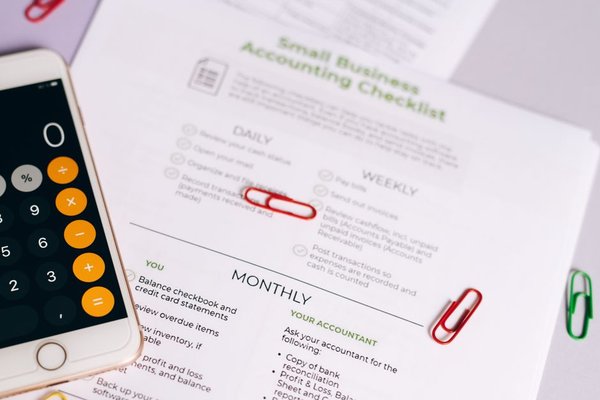
A month can look profitable in your invoicing app while the bank balance tells another story. A customer might not have paid, a subscription may have renewed twice, or a card charge may be miscategorized. A monthly bookkeeping checklist catches those gaps before you make decisions using unreliable numbers.
The aim is a repeatable bookkeeping routine that shows what a business earned, spent, owes, and is owed. The workflow below suits many small businesses, with adjustments for their accounting method, industry, and local tax requirements.
Start with a consistent monthly close
Choose a date for your financial close shortly after statements and payment-platform reports become available. Create a folder for each month containing statements, invoices, receipts, payroll summaries, and unresolved questions. Assign responsibility for preparation and, if possible, independent review.
Use the same sequence each time: record activity, reconcile balances, check invoices and bills, make necessary adjustments, then review reports. Reports prepared before those checks can look precise without being accurate.
1. Gather statements and supporting records
Collect bank and credit-card statements, payment processor reports, sales summaries, supplier invoices, and purchase receipts. Include refunds, cash payments, financing activity, and staff reimbursements. Request missing documentation while transactions are still familiar.
Store records securely and consistently. A purchase record should help establish what was bought, when, from whom, and for how much. Retention requirements depend on jurisdiction and record type; avoid deleting supporting documents on an arbitrary schedule.
2. Record and categorize transactions
Check imported bank feeds for missing entries and duplicates. Categorize transactions based on their actual purpose: rent, advertising, software, inventory, borrowing, or owner withdrawals. A loan payment can contain both interest and principal; recording the whole payment as an operating expense distorts profit.
Resolve uncategorized charges and keep business and personal spending separate. Owner withdrawals are not automatically deductible expenses. Check that transfers between business accounts have not been recorded as new income or additional spending.
3. Reconcile bank accounts and credit cards
Compare the bookkeeping balance for each account with its statement. Investigate outstanding payments, deposits in transit, merchant fees, bank charges, transfers, and unexplained differences. Do not force figures to match by entering a mystery adjustment.
Imagine a bakery with $8,400 in card sales and a $8,148 bank deposit. If the processor withheld $252 in fees, recording only the deposit understates sales. Recording the full $8,400 as cash received overstates the bank balance. The processor report supports separate entries for gross sales, fees, and the net deposit. Refunds or timing differences would need their own treatment.
For more detail, a guide to reconciling business bank accounts can help distinguish timing differences from actual errors.
4. Check customer invoices and receivables
Match incoming payments with open invoices. Look for unapplied receipts, duplicate invoices, credits, and overdue balances. If customers buy on credit, review an accounts receivable aging report and follow up on overdue amounts with clear, courteous reminders.
An invoice is not the same as cash received. Accrual accounting generally records revenue when earned, while cash accounting generally follows receipts, subject to applicable rules. Knowing which method the business uses helps explain why reported sales differ from bank deposits.
A consistent invoice payment follow-up process reduces the chance that one overlooked balance turns into a long-standing collection problem.
5. Review bills and outstanding obligations
Match supplier payments with invoices and check recurring charges for duplicates or unexpected price changes. Review unpaid bills, credit-card balances, loan balances, and upcoming payment dates. Confirm that payments are not left marked as outstanding.
A strong cash balance today may still need to cover rent, suppliers, and taxes next week. A short accounts payable schedule makes those commitments visible before the business spends money it needs elsewhere.
6. Check payroll, tax accounts, and adjustments
For businesses with employees, compare payroll reports with wages, deductions, employer costs, and payments. Check payroll liabilities. Review sales tax, VAT, or similar accounts where applicable and note approaching deadlines; the monthly close itself does not replace required tax filings.
Record appropriate period-end adjustments, potentially including prepaid costs, depreciation, accrued expenses, inventory, or unearned revenue. The right entries depend on the business and its accounting basis. Ask an accountant about uncertain adjustments rather than making entries solely to improve appearances.
7. Review financial reports after reconciling
Examine the profit and loss statement, balance sheet, and cash flow information. Compare results with the previous month and, when useful, the same month last year. Look beyond the headline profit number.
Did sales rise while customer collections slowed? Are expenses growing faster than revenue? Does the balance sheet contain unexplained liabilities or old receivables? Profit and available cash are different measures, and both deserve attention. A guide to reading a small business profit and loss statement can make these questions easier to answer.
8. Document exceptions and sign off
Keep a close note identifying reconciled accounts, unusual entries, unresolved differences, assigned follow-ups, and the completion date. Record who prepared and reviewed the work. Do not mark an unexplained discrepancy as resolved merely to finish an accounting checklist.
Back up records and restrict access to sensitive financial files. If a late correction arrives after the reports are issued, document it and apply a consistent correction process.
Turn the checklist into a five-session routine
Spread monthly bookkeeping tasks across manageable sessions. First gather documents and record missing transactions. Next reconcile accounts. Then inspect receivables and payables. Handle payroll and adjustments before the final report review and sign-off. The order is more useful than a rigid time limit.
Reserve calendar time every month. If missing receipts repeatedly delay completion, improve receipt collection during the month instead of treating that problem as a permanent closing task.
Frequently asked questions
What belongs on a monthly bookkeeping checklist?
Include document collection, transaction recording, bank and card reconciliation, invoice and bill reviews, applicable payroll and tax checks, necessary adjustments, financial reports, and a record of unresolved issues.
How long should a monthly close take?
It depends on transaction volume, complexity, and how current the books already are. Multiple payment processors, inventory, or past discrepancies can add work. Accuracy matters more than an arbitrary deadline.
Is monthly bookkeeping the same as filing taxes?
No. Bookkeeping organizes and verifies financial activity. Tax reporting follows separate rules and deadlines that vary by jurisdiction and tax type.
Can bookkeeping software automate the entire process?
Software can import transactions, suggest categories, and produce reports, but a person still needs to identify duplicates, investigate discrepancies, confirm invoice status, and assess whether the figures make sense.
Keep improving the routine
A dependable monthly bookkeeping checklist does more than tidy the records. It reveals which customers need follow-up, which expenses deserve attention, and whether cash will cover upcoming obligations. Repeat the checks, document exceptions, and use the finished numbers to plan the next month with greater confidence.