

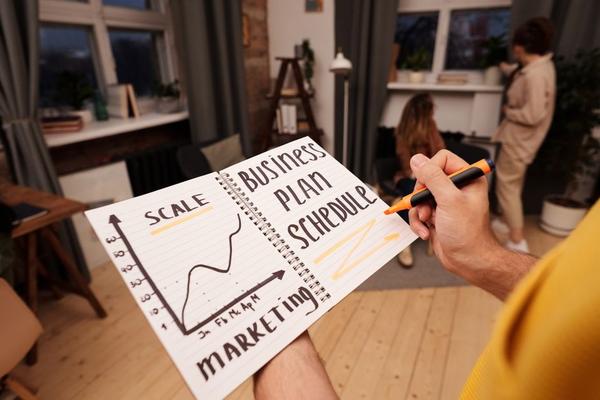
Founders in 2026 are expected to learn quickly, keep overhead low, and avoid spending months perfecting an idea customers may not want. That makes the business plan vs lean startup decision more important than it first appears. Both approaches can turn an idea into a workable company, but they solve different problems. Your best choice depends on the industry, funding needs, uncertainty, and cost of getting an early decision wrong.
What Is a Traditional Business Plan?
A traditional business plan is a structured document explaining what the business will sell, who it will serve, how it will operate, and how it expects to make money. It commonly covers the company, market, products or services, marketing, operations, management, financial forecasts, and funding requirements. An executive summary usually brings the main argument together for readers who need a quick overview.
This format is valuable when several decisions must align before launch. Opening a restaurant, manufacturing a product, applying for a bank loan, or entering a regulated market may require careful work on premises, equipment, licences, suppliers, staffing, insurance, and cash flow. Detailed planning can expose expensive gaps while changes are still relatively easy to make. Preparing forecasts also forces you to examine pricing, margins, fixed costs, working capital, and available cash. However, a plan is a decision tool, not a guarantee.
What Is the Lean Startup Model?
The lean startup model treats a new business as a set of assumptions that need evidence. A founder identifies the riskiest belief, creates a limited test, measures the response, and decides what to change next. A minimum viable product may be involved, but it should be a purposeful learning tool rather than merely an unfinished or poor-quality product.
A proposed subscription service, for example, could test demand through interviews, a landing page, a manual pilot, or a small paid trial. The aim is to learn whether the problem matters, whether the solution appeals to the intended customer, and whether people will pay. This approach keeps early commitments smaller and makes revision an expected part of startup planning.
Where the lean canvas fits
A lean canvas condenses the concept into a one-page view of the customer, problem, solution, channels, revenue, costs, key measures, and competitive advantage. It is quick to update while the idea is changing. However, it is a thinking framework, not a substitute for every forecast, legal check, or operating plan a business may eventually require.
Business Plan Comparison: The Key Differences
Speed and depth
Traditional planning invests more time before launch and aims for a coherent, detailed picture. Lean planning starts with enough structure to run the next useful experiment. If the model is familiar and changing direction would be costly, depth has real value. If customer behaviour is uncertain and the offer can be tested cheaply, speed may produce better information than extended desk research.
Forecasts and evidence
A business plan depends on researched assumptions about sales, costs, growth, and market behaviour. The lean method tries to replace the most important assumptions with observed evidence. Neither source is flawless: forecasts can be wrong, while a small test may attract an unrepresentative group or measure the wrong behaviour. Sound decisions separate what is believed from what the evidence actually shows.
Funding and audience
The intended reader often determines the format. A lender may want forecasts, repayment capacity, ownership details, and a clear account of how funds will be used. Investors may expect similar financial discipline alongside proof of customer interest. A self-funded digital startup may initially gain more from a lean canvas, an experiment schedule, and a basic cash budget than from a long narrative.
Cost, risk, and regulation
Lean experiments work best when a small test is safe, lawful, and informative. They are not a shortcut around safety standards, privacy duties, professional rules, or sector approvals. A medical device, financial service, construction project, or physical venue may require substantial planning before launch. Even there, selected assumptions can sometimes be tested through interviews, prototypes, simulations, or controlled research.
Which Startup Planning Method Should You Use?
Choose a traditional plan for hard-to-reverse commitments
A full plan is usually the stronger starting point when you need external finance, several partners must coordinate, launch requires significant capital, or mistakes could create serious legal, safety, or operational consequences. It also helps when the revenue model is familiar but execution is complex. Detailed budgets, responsibilities, milestones, and contingency plans then become practical management tools.
Choose lean when uncertainty is the biggest risk
Lean startup planning often fits businesses that can reach prospective customers quickly, build a low-cost test, and adjust without wasting major assets. Software, online services, creative products, and some professional services may suit this pattern. The purpose is not to avoid planning; it is to focus planning on the next uncertainty that matters.
Use a hybrid for discipline and flexibility
For many founders, the best answer to business plan vs lean startup is a hybrid. Create a concise plan covering the customer, offer, economics, cash needs, responsibilities, and major risks. Use a lean canvas to keep the model visible, then test its least certain parts. Update the forecasts and operating plan as evidence arrives.
Common Mistakes to Avoid
Do not treat a traditional plan as a prediction guaranteed to come true, or lean methods as permission to operate without a budget. Vanity measures such as page views and sign-ups can mislead when the business depends on paid conversions, retention, or healthy margins. Give every test a clear question, decide which result would change your mind, and record what you learn. Revisit your chosen approach when costs, customer feedback, regulations, or market conditions change.
Frequently Asked Questions
Is a lean canvas the same as a business plan?
No. A lean canvas is a compact snapshot of key assumptions. A traditional plan provides more detail about the market, operations, management, finances, and funding. The canvas is easier to revise; the full plan gives readers more depth.
Can I get funding with a lean startup plan?
Possibly, but it depends on the funder. Evidence from experiments can strengthen the case, yet lenders and investors may still request forecasts, risk analysis, funding use, and other formal information. Prepare what your specific audience needs.
Does every startup need financial projections?
Every startup should understand its costs, pricing, cash needs, and route to sustainable revenue. The detail can vary, but even a lean venture benefits from a realistic cash budget and regular checks on the assumptions behind it.
When should I expand a lean plan?
Add more detail when you are raising money, hiring a larger team, signing major contracts, entering a regulated activity, or making costly commitments. You do not need to abandon lean learning; formal planning and continued experimentation can work together.
Conclusion
The traditional business plan provides depth, coordination, and financial discipline. The lean startup model provides speed, direct learning, and flexibility. Plan more deeply when commitments are large or tightly controlled, and test more rapidly when customer demand is uncertain and change is affordable. For many new ventures, a concise plan supported by a lean canvas, focused experiments, and regularly updated numbers offers the most practical balance.